
Looking for the right materials?
Here’s what you need to know.
Which stone works best for backlighting?
Once translucent stone is illuminated it doesn’t all behave the same way.
Each stone responds to light differently when backlit, some create a soft, even glow and others produce a bold contrast with dramatic movement. Choosing the right stone isn’t just about how it appears on the surface, it’s about how the material transforms when the light passes through it.
What type of stone can be backlit?
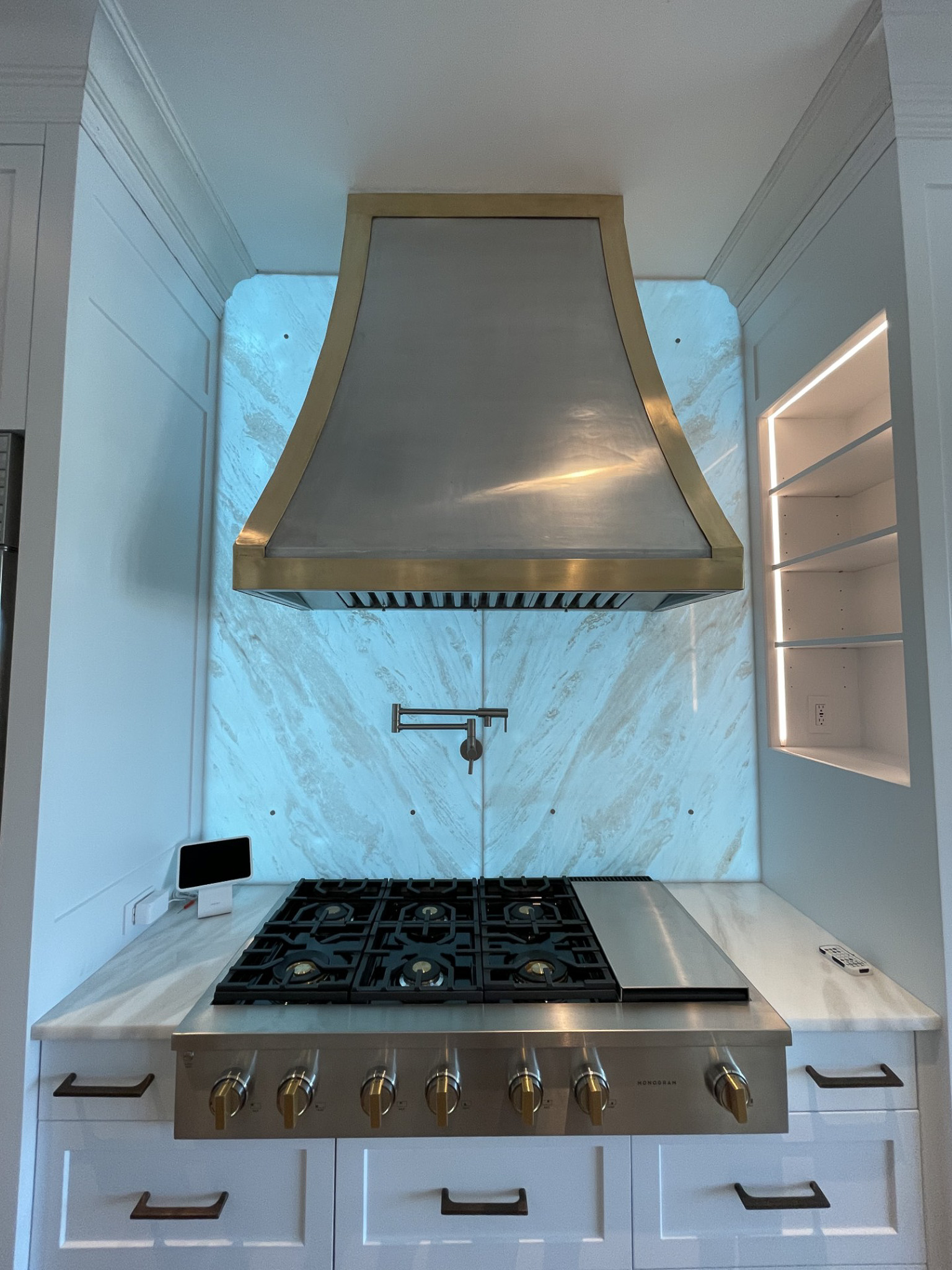
Many types of stone, including onyx, agate, and select quartzites have natural translucent properties. When light is introduced behind the surface, it passes through the material rather than stopping at it. At Luminous Stone, this is achieved using fine, slim stone cuts instead of traditional thicker slabs. This allows the light to interact with the material in a much more intentional way. The result is a soft, diffused glow that enhances the stone’s natural veining and transforms it into something more than a surface, it becomes a feature.
Once translucent stone is illuminated it doesn’t all behave the same way.
Each stone responds to light differently when backlit, some create a soft, even glow and others produce a bold contrast with dramatic movement. Choosing the right stone isn’t just about how it appears on the surface, it’s about how the material transforms when the light passes through it.
Agate
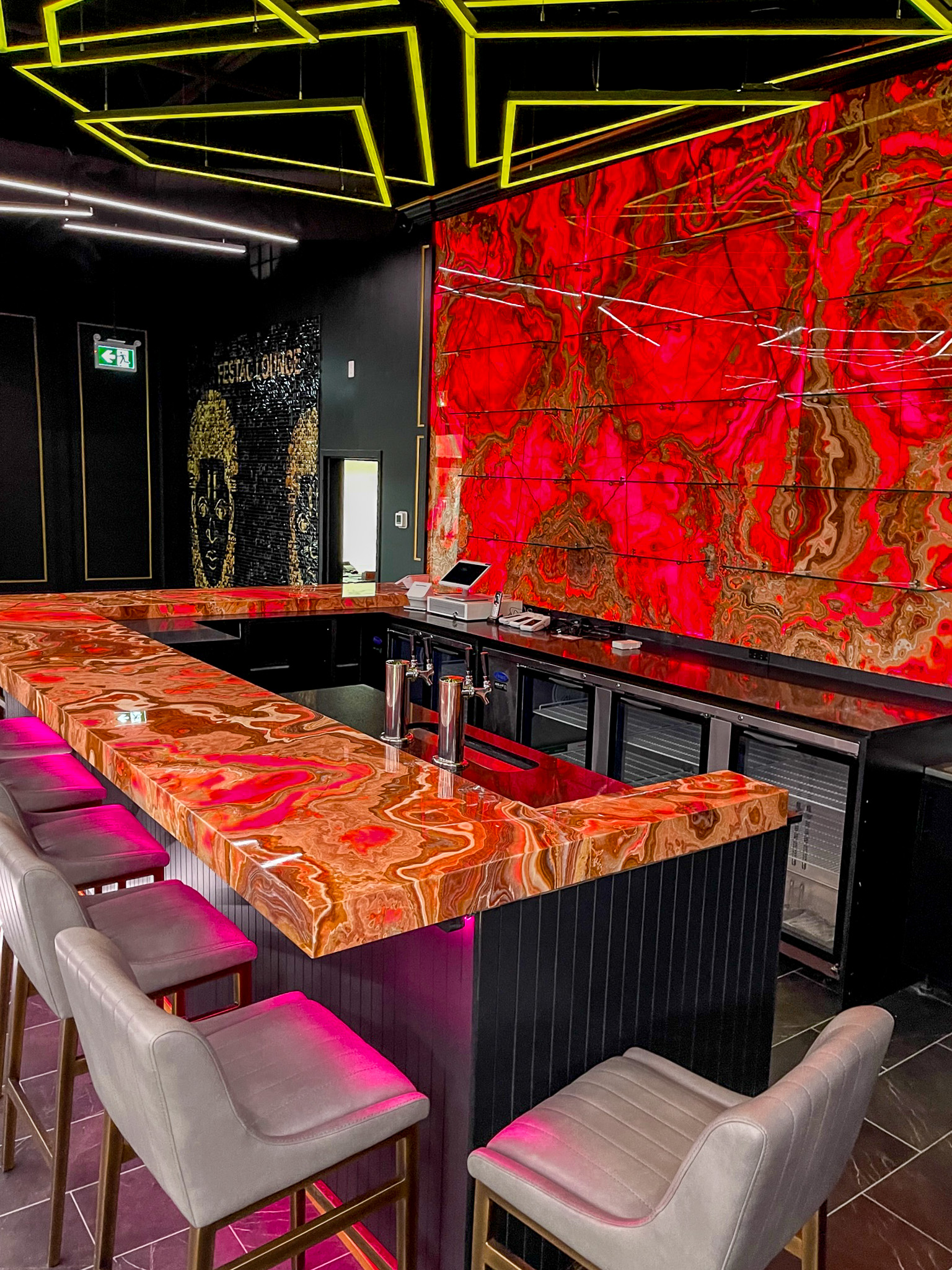
Agate offers a completely different effect, Agate is composed of natural stone slices, it becomes highly vibrant when backlit. Light is able to pass through each section differently which creates an interesting contrast, depth and more dramatic visuals.
Onyx
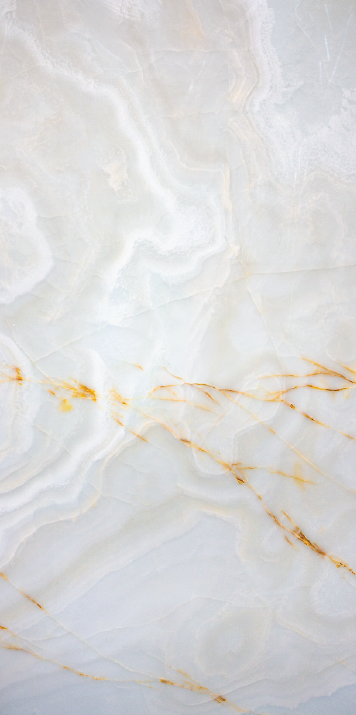
Onyx is the most commonly used stone for backlighting. This is because its naturally translucent. When it’s illuminated it creates a soft glow that highlights the layering movement and the colour variation. Some onyx varieties can appear calm or minimal while others have more expression depending on their pattern or veining.
Quartzite
This stone can be used for backlighting but the effect is generally a more subtle one. Rather than glowing evenly, quartzite highlights veining and natural variation in a more subtle way. This makes quartzite a great option when a softer more natural aesthetic is preferred.
Why does material selection matter?
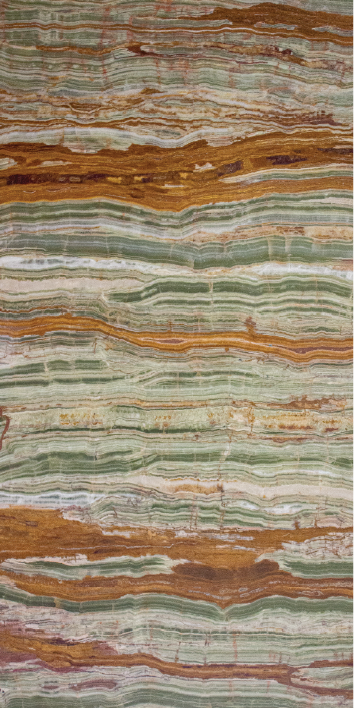
Even in the same category of the stone, translucency can vary from slab to slab. This means that the final result depends on both the type of material but the specific selection, scale and how it is crafted into the space. Backlit stone works best when these factors are harmonious from the start.
The best way to understand how stone responds to light is to come take a look in person. Visit our showroom in Cambridge or explore our materials collection
Our Approach
At Luminous Stone, materials are selected based on how each stone responds to light in a room. We consider the translucency, patter, scale and how it applies to ensure the final result aligns with the intention of design. Whether its a soft ambiance or a bold expression.
Understanding the Detail?
Choosing the right stone is only part of the planning process. How that material is refined and fabricated plays a major roll in how it responds to light.
In our next article, we take a closer look at how thickness impacts backlit stone and why it matters more than you think.